.png)

The Global Gen Z Rebellion: A Consciousness Without Borders
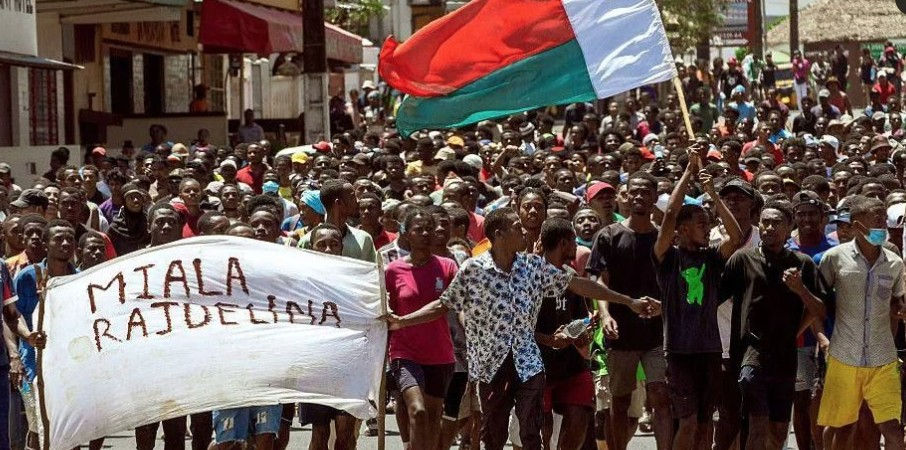
In an era where algorithms curate anger and activism alike, Generation Z has emerged as the world’s most politically restless cohort. From the rice fields of South Asia to the volcanic highlands of Peru and the bustling streets of Manila, young people are rejecting the inertia of older orders — of corrupt governments, failing democracies, and inherited inequality. What was once dismissed as a “South Asian youth revolt” — visible in Bangladesh’s student protests or India’s anti-CAA movement — is now part of a broader, planetary rhythm of dissent.
From the crowded lanes of Dhaka to the volcanic highlands of Peru, from Antananarivo’s restless streets to the floodlit sprawl of Manila, this generation has reimagined revolt not as spectacle but as consciousness. They inherit the world as ruins and respond not merely with anger but with architecture — of solidarity, digital empathy, and cultural reinvention.
Key characteristics of the Gen Z led revolution
Online organization: Gen Z uses social media and encrypted messaging apps to spread awareness, coordinate protests, and critique governments.
Digital-to-physical shift: Online outrage and coordination frequently lead to large-scale street protests and demonstrations.
Diverse catalysts: While a single cause may spark a movement, such as a social media ban in Nepal or a pension reform in Peru, the protests quickly expand to broader issues.
Widespread grievances: Common underlying causes include political corruption, economic inequality, high youth unemployment, and a perceived lack of social mobility.
Global reach: The movement is not limited to one region, with notable protests occurring across Asia, Africa, South America, and Europe.
Inspiration across borders: News of protests in one country inspires similar actions in others, fostering a global sense of youth solidarity and shared tactics.
The Age of Fragmented Uprisings
In the old lexicon of protest, revolutions had centers: Paris, Petrograd, Beijing. But Gen Z’s revolts have no capitals. They flicker across timelines, encrypted chatrooms, and the porous borders of the internet.
In Madagascar, students once trained for bureaucratic lives now occupy campuses demanding ecological justice. They livestream deforestation raids, document the quiet violence of mining corporations, and refuse to separate environmental collapse from economic inequality. Their rebellion begins in hashtags but spills into the streets — less a movement and more an awakening.
“Maybe our parents thought politics was a profession,” says 22-year-old activist Haja Andrianina. “For us, it’s survival.” Across continents, the same sentiment echoes in different tongues.

Peru: Revolution in the Highlands
In Peru, young Quechua and Aymara protesters have carried banners painted with grief and defiance — not as symbols of nationalism but as testimony. Their marches against corrupt regimes are not just political demonstrations; they are acts of historical repair.
When the police cracked down in Cusco, the chants that rose from the crowd were ancient, rhythmic, communal — the same chants used centuries ago against conquistadors. But now they were filmed on smartphones, shared across the world, remixed into protest songs on TikTok.
“Rebellion has become portable,” writes Peruvian sociologist Gianina Tapia. “It no longer depends on ideology but on imagination.”
The Philippines: Digital Memory as Resistance
Few places embody this imaginative rebellion better than the Philippines. Here, Gen Z has learned to weaponize nostalgia — reclaiming the memory of dictatorship from revisionist YouTube channels and state propaganda. They fight not on streets but in algorithms, waging quiet wars of remembrance.
The Marcos dynasty’s return to power might once have signaled the victory of amnesia. Instead, it has created a new generation of historical custodians. Through podcasts, music videos, and Instagram archives, they are piecing together what was erased — transforming grief into digital preservation.
“Truth has become our protest,” says 20-year-old student filmmaker Leila Bautista. “We are not just remembering; we are refusing to forget.”
The Digital Commune
What binds these scattered resistances is not ideology but affect — a shared emotional grammar. Gen Z’s rebellions are aesthetic as much as political: they are meme and manifesto, satire and sermon.
They have built what one might call a digital commune — a decentralized world of mutual recognition. The same hand that crafts a dance video for Instagram also sketches slogans against fascism; the same device that distracts can also ignite.
It is tempting to dismiss this as fleeting, a protest of pixels. Yet, it is precisely the fluidity of their expression — the refusal to fix themselves to one form — that gives it endurance.
After the Street
If the revolutions of the 20th century belonged to the barricade, the revolutions of the 21st belong to the feed — no less visceral, only differently embodied. Gen Z’s revolt unfolds through art, climate strikes, feminist collectives, queer solidarities, and migrant networks.
It is a rebellion that distrusts hierarchy, that replaces party with platform, manifesto with meme. In that sense, it is the most democratic uprising of all: everyone is a participant, even if momentarily.
A Consciousness, not a Campaign
To call this a movement would be to misunderstand its texture. It is not a march toward a single destination but an awareness that the old roads no longer lead anywhere. This generation’s revolution is internal as much as external — a psychological emancipation from cynicism, an insistence that despair cannot be a worldview. They refuse to inherit the hopelessness that their elders normalized.
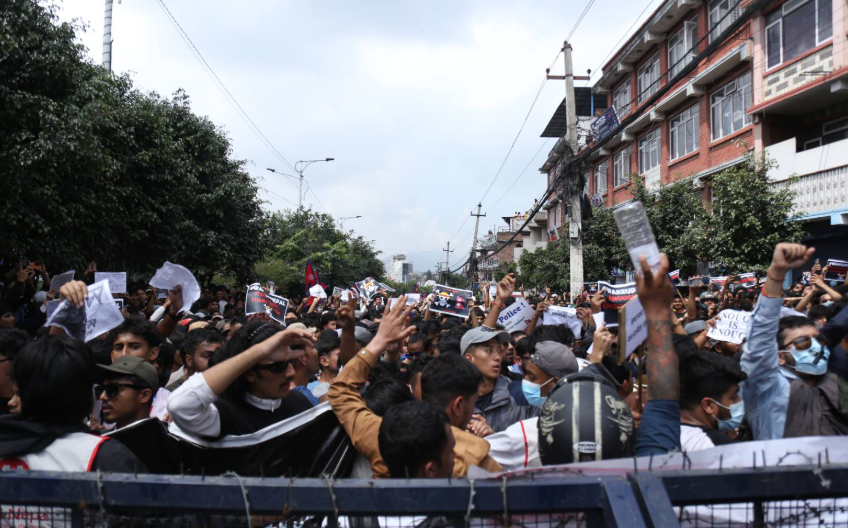
In Antananarivo, in Lima, in Manila — and yes, in Delhi, Dhaka, and Kathmandu — the same message reverberates beneath the noise of daily life: we are awake now.


Comments