.png)

Paatal Lok 2: Breaks with Stereotypes, Makes North-East Mainstream
- Abhishek Srivastava

- Mar 1, 2025
- 5 min read
Updated: Aug 21, 2025


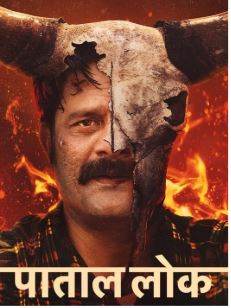
Paatal Lok 2, the much-anticipated and delayed second season of India's best OTT series, is refreshingly surprising. At a time when OTT content is saturated with new shows every week, it managed to introduce compelling plot twists while bringing the historically complex politics of Nagaland to the forefront of this intriguing drama.
Rooted in the heart of Nagaland, a Northeastern state long considered remote—both culturally and geographically—for it to be 'mainstream’ in Indian cinema or streaming, the show challenges this stereotype. The data proves this notion incorrect. According to Ormax Media, a consumer ratings agency, 7.2 million people streamed Paatal Lok Season 2. Social media chatter during its release week reflected that almost everyone watched it until the last episode.
Beyond the data, credit goes to Paatal Lok creator Sudeep Sharma, director Avinash Arun Dhaware, and the OTT platform Prime Video for focusing on a Northeastern state and its political complexities in a mainstream show that was highly anticipated. Speaking in an interview with a live audience during the OTT’s promotional spree, Sharma expressed his long-standing desire to bring a story from this region to a nationwide audience. Originally from Guwahati, Assam, his research led him to Nagaland, where shooting toward the end of the COVID-19 pandemic was no easy task. Besides the logistical challenges, the team remained committed to ensuring that the show never exoticized Nagaland or portrayed it as a land of inexplicable realities.
Whether it was the misguided politician’s son, a widow grappling with the criminal past of her late political leader husband, or the antagonist, the series maintained authenticity. Hathiram Chaudhary, the tragic hero played masterfully by Jaideep Ahlawat, brings the perspective of an outsider to this state. His journey into this Paatal Lok—unlike the high-profile political-media nexus of Season 1—is uncharted territory for him, offering the audience a ringside view of life in Nagaland. Paatal Lok Season 2 masterfully weaves Northeast India's essence into its narrative, offering an authentic and layered portrayal of Nagaland.
The series opens with stunning visuals of its dense forests and traditional villages, immediately grounding the story in the region's raw beauty. As Inspector Hathiram Chaudhary navigates the case, he encounters local law enforcement, leading to a tense yet thought-provoking exchange where a Naga officer highlights the deep-seated biases of mainland officials.
The insurgency angle is explored through Reuben, an enigmatic leader struggling with his father’s legacy, reflecting the internal conflicts within tribal communities. Throughout the series, characters fluently converse in Nagamese, seamlessly integrating the region’s linguistic diversity. The cultural authenticity extends to everyday life, with scenes showcasing traditional Naga meals and attire, subtly enriching the narrative.
One striking moment at Kohima airport—where a Bihari man loudly demands a permit—encapsulates the bureaucratic challenges outsiders face and the complex relationship between the Northeast and mainstream India. These elements, carefully woven into the plot, elevate Paatal Lok 2 beyond a crime thriller, transforming it into a socially conscious narrative.
Showrunner Sudeep Sharma and director Avinash Arun Dhaware have kept the focus on emotions and issues that resonate with audiences across India. Themes such as unemployment, lack of industry, internal conflicts between tribes and sections of society, and the spectre of the drug trade complicate the situation in a state with a bloody history of failed insurgencies. The characters speak Nagamese and English, along with Hindi, seamlessly integrating multiple languages into the storytelling.
This approach challenges the Hindi film and TV industry’s obsession with using only colloquial Hindi for dialogues. Here, Christmas carols, hymns, and the Biblical concept of sin are woven into the teleplay with a near-poetic touch. While the continued acclaim and popularity of Paatal Lok are validating, another major Prime Video series, Family Man, is also set in the Northeast. While not much has been revealed, given that the spies in the show travel across India, a portrayal of the region that goes beyond tokenism can be expected. Although not set in the Northeast, Sujoy Ghosh’s Jaane Jaan—which received high viewership and critical acclaim on Netflix—is deeply rooted in the ways of life in Kalimpong, reflecting the culture of Darjeeling with strong local influences.
The fact that leading OTT platforms are betting on stories from Northeast India is a reflection of what consumer data has shown for years—the region is neither remote nor difficult to relate to. If anything, it is a treasure trove of unexplored stories with deep historical connections to the rest of India.
It is not surprising that mainstream Hindi cinema has rarely gone beyond tokenism or inadequate research when depicting Northeast India. Rakesh Roshan’s Koyla (1997) used Arunachal Pradesh—a naturally stunning state—merely as a backdrop for a mediocre and unpleasant plot. Vishal Bhardwaj attempted to explore the complex pre-Independence history of the region, particularly its role in World War II, in Rangoon (2017), but the film barely touched upon the actual events that shaped this period.
Perhaps the only filmmaker to attempt an authentic narrative was Mani Ratnam, whose Dil Se (1998) highlighted the alienation and unrest in the region. However, even that film’s portrayal of its suicide bomber character lacked grounding in reality. Insurgencies in the Northeast have always been rooted in the struggle for local identity and the corruption of governments—subjects too complex for mainstream Bollywood, which is why the region remained underrepresented.
Not featuring the Northeast in film or TV reflects the fishbowl mentality of the small, insular group that dominates the Hindi film industry. It is a space restricted to a few families and individuals connected by blood or cultural background—mostly Punjabi and Sindhi, and predominantly North Indian.
Their primary goal in making films is to entertain the "masses" while making a fortune in the process. As a result, oft-repeated cultural references to Punjab, however stale and repetitive, continue to appear in their films. Festivals celebrated in North India, including Karwa Chauth—which has almost zero cultural resonance beyond a few states—frequently feature in film songs and scenes.
This is not an attempt to diminish any specific culture within India but rather an argument for the need to highlight the country’s vast diversity instead of focusing on just a few regions. Moreover, the presumed "masses" no longer resonate with these same tired tropes, as reflected in the performance of recent Hindi films.
Audiences have embraced OTT platforms for their convenience, variety, and cost-effectiveness compared to moviegoing. These platforms also expose them to content from around the world. Web series offer the opportunity for long-form storytelling, allowing cultural contexts and historical situations to be explored in depth. Characters like Hathiram Chaudhary in Paatal Lok get the time and space to become truly relatable.
Beyond Northeastern stories, shows like Kohrra on Netflix and Bandish Bandits on Prime Video have successfully set their narratives in specific cultural and social landscapes. There is immense potential for more such stories. In the end, what truly matters to audiences is a gripping story, strong characters, and the investment of their time in quality entertainment.


Comments