.png)

Pahalgam Massacre: Innocents Blood Shatters Peace in Kashmir

Innocents’ blood has once again shattered the apparent peace in the Kashmir Valley. Over the past few years, people were assured time and again that the terrorism has been tackled once and for all in the Valley. The repeal of Article 370 of the Constitution was touted as the final integration of Jammu and Kashmir with India in all aspects of the Constitutional scheme, and thereby the harbinger of peace.
But all hope was dashed when terrorists killed 26 tourists who had gathered at a Pahalgam meadow to honeymoon or to just picnic away from the North Indian plains signed by the April’s scorching sun.
But the terrorists this time failed to achieve their mission: to polarise people on communal lines as the post tragedy responses showed. People cutting across the community divide came forward to extend relief, and condemned the killing in unison without any if or but. The opposition parties extended their full support to the government to take whatever action it feels fit to deal with the national emergency.
Political slugfest over the Pahalgam attack is also on the cards as parties gear up to battle it out in the open in the poll-bound states. Early next year, five states -- Assam, Kerala, Tamil Nadu, West Bengal and Puducherry -- will go to polls in what is perceived to be a do-or-die battle for parties like the Trinamool Congress, the Dravida Munnetra Kazhagam (DMK) and the All-India Dravida Munnetra Kazhagam (DMK).
Soon after returning from Saudi Arabia following the attack, Prime Minister Narendra Modi headed to Bihar on April 24 to give a stern message that those who were involved in the killing of tourists in Kashmir would face a “punitive action beyond their imagination.”
Bihar was deliberately chosen to send a message to Pakistan since the state is going to polls in October-November this year. The opposition criticised Modi and Nitish Kumar for holding a political-cum-election rally in Bihar at a time when the nation was mourning the victims of the Pahalgam terror attack.
It was widely felt that Modi should have addressed the nation as had the then Prime Minister Manmohan Singh done after the Mumbai terror attacks in November 2008. Though he went to Bihar to address the rally, he decided to skip the crucial all-party meeting in Delhi on April 26.
This decision came as a surprise to everyone given that such important meetings in the past were chaired by the Prime Minister only. Evidently, the all-party meeting lost all its relevance due to Modi's absence though ministers sought to assure the leaders of the political parties that they would convey their sentiment to the Prime Minister.
One of the key points that emerged at the meeting was the government's admission of the security lapse. The attack on tourists at Baisaran valley in Pahalgam was a glaring example of security lapse and intelligence failure. Tourists were left to fend for themselves as no security personnel was visible in the vicinity of the area. It took over one and a half hours for the security forces to reach the site.
Where were the security forces and why were tourists left at their own mercy are some of the basic questions that the government must answer. These are also the questions that any media would ask of the government.
But Indian media continues to disappoint the people of this country by not asking tough questions of the government of the day. Instead, the national media seems to be working overtime to shield the ruling dispensation.
Imagine a minister casting aspersions on the patriotism of the people in a bid to shift the blame after such an incident in any other country. The minister would have been taken to task over the government's failure but in India he got away with it.
Union minister Piyush Goyal stated that till all 140 crore Indians do not consider patriotism and nationalism as their param dharma (supreme duty), such types of incidents will continue to trouble our country. This was like adding salt to the injury. Goyal tried to hide the failure of his government by setting the nationalism narrative.
Parties across the political-ideological spectrum have set aside their differences in the aftermath of the deadly attack. The country has stood united with the opposition offering unconditional support to the government on the issue. Such a unity reinforces the spirit of India.
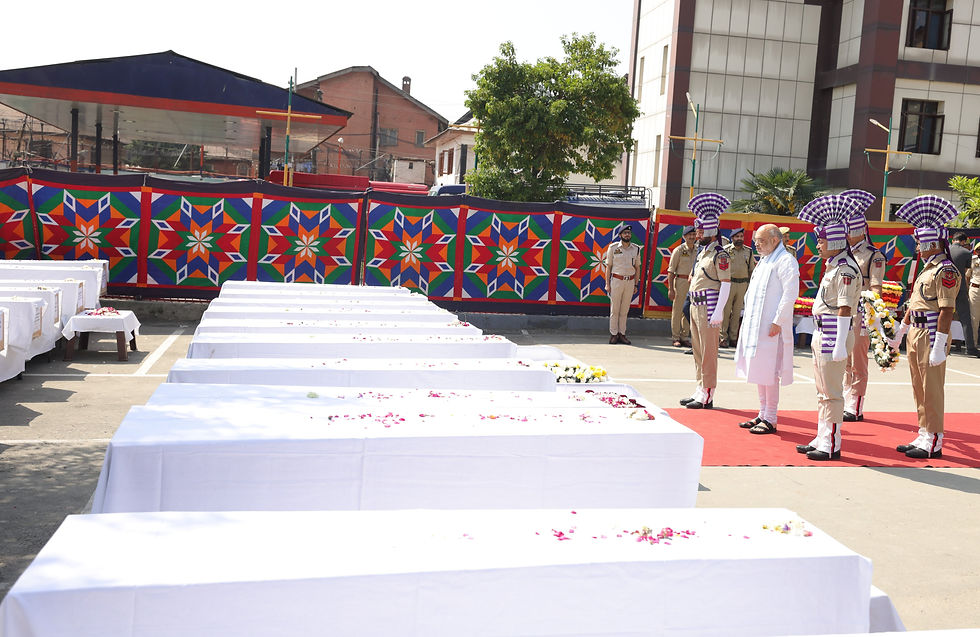
But will it prevail given that the Bihar assembly elections are fast approaching remains to be seen. Last time in 2019, the opposition faced a flak for seeking proof of the air strikes on terror camps in Balakot across the Line of Control (LoC). These strikes were carried out in response to the deadly suicide attack on the Central Reserve Police Force (CRPF) convoy on February 14, 2019, killing 40 personnel.
The Pulwama attack resulted in a surge in the nationalistic fervour in the country and the BJP, led by Modi, riding on that sentiment registered a thumping victory in the 2019 Lok Sabha elections. The opposition was decimated.
Precisely, why some political observers feel that the Pahalgam attack will have a huge bearing on the upcoming Bihar elections. The BJP's Chhattisgarh unit tried to use the attack to derive political mileage but the move backfired as it triggered a political storm with the opposition slamming the ruling party for insulting the victims.
"Dharam pooccha, jaati nahi…yaad rakhenge (asked about religion, not caste…will remember)" read a post by the BJP's Chhattisgarh unit on X with a Ghibli-style image of a newly-married woman sitting next to her husband killed in Pahalgam. Not only the opposition but the netizens too criticised the BJP for such a post.


Comments