.png)

Forty Years on, Bhopal Gas Tragedy, Ghost Yet to be Exorcised
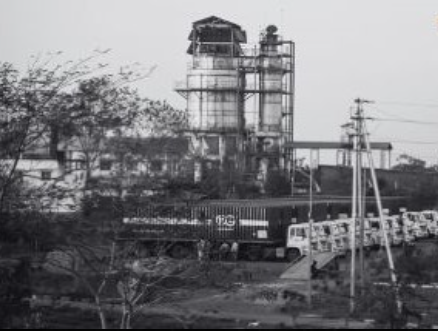
It came in nightly stealth accompanied by a convoy of security vehicles with all the accoutrements to ensure its safe passage to a place where it would meet its end, forty years after having lied dormant but live at the now defunct Union Carbide plant at Bhopal.
But when nearly 350 tonnes of toxic waste reached the Re Sustainability Limited incinerator facility in the industrial town of Pithampur in Dhar district in the state, it faced a barrage of vociferous protests by the townsmen who say that they cannot admit another potential threat to their environment and health as they are already having to live with city’s pollution.
They are spearheading the protest under ‘Pithampur Bacha’ campaign. It saw many arrests, lathi charges and bandh. An angry group of protestors pelted stones at and tried to march to the incineration facility and two persons tried to immolate themselves.
More than 8,000 thousand had suffocated to death and several thousand suffered lingering damages to their health, and over 5,00,000 people living around the plant were exposed to highly toxic gas methyl isocyanate (MIC) when it leaked out of the pesticide plant in the intervening December night of 2-3 in 1984 amid the Lok Sabha election.
Though state Chief Minister Mohan Yadav quoting experts without naming them says that the waste has almost become free of toxicity as such wastes do over a period of time, and has assured people that no harm to them will be tolerated and appealed to them to not fall prey to false rumours, emphasising that any action regarding sensitive issues will be taken strictly in compliance with the orders of the Bhopal High Court but no scientists have so far come forward to certify that the waste has no toxicity. Hence, people are not ready to buy the Chief Minister arguments. The matter has reached the High Court. A Bench headed by Chief Justice Suresh
K. Kait has given time to the state government till February 18 to comply with its order directing it to clean up the site of the Union Carbide factory in Bhopal. In the meanwhile, the incineration will hold.
‘’We welcome the High Court’s decision, said Hemant Hirole, convener of the Pithampur Bachao Samiti, adding that it aligns with the sentiments of local residents who strongly oppose the incineration of waste near their city. The people of Pithampur demand that the waste be transported to another location using a green corridor for a safe and swift movement, similar to how it was brought here from Bhopal, he says. He warns that stronger protest will be held in the time to come, and in no way incineration near the city under any circumstances will be allowed. The Pithampur Bachao Samiti has warned of a larger agitation. Their members say that that they are ready to knock on the doors of the Supreme Court, if needed.
The people of Pithampur just want immediate return of the toxic waste containers back to Bhopal. ``We have only one request to the state government that the containers of the toxic waste should be sent back from here (Pithampur), social worker Sandeep Raghuvanshi, who went on a hunger strike in support of the protesting people, says.
They fear that the incineration of the waste will irreparably cause harm to their land, water, and health, leaving them vulnerable to chronic illnesses and environmental degradation, even if 10 % of what occurred in Bhopal happens to repeat here post-incineration.
According to an official, the waste was transported as per the instructions of the Supreme Court for its disposal. He said that the process of waste disposal has been thoroughly tested from time to time by various institutions of the Central Government. And on the basis of their studies and reports submitted to the Supreme Court, in March 2013, 10 tonne of Union Carbide-like waste from Hindustan Insecticide Limited, Kochi, Kerala, was transported and a trial run was conducted at the Treatment Storage and Disposal Facility (TSDF) at Pithampur under the supervision of the Central Pollution Control Board. The report of the successful trial run was presented to the Supreme Court.
Apart from it, the Chief Secretary of Madhya Pradesh conducted a separate investigation on three points in detail—heath related tests in villages surrounding the incineration plant, effects on crop productivity and quality of water from the regional sources-- the official clarifies. Contrary to it, N D Jayprakash. co-convener of the Bhopal Gas Peedith Sangharsh Sahayog Samiti (BGPSSS), is of the opinion that a wide and proper trial of incineration of hazardous waste samples must be undertaken to observe all the values within the prescribed time limit.
The point is the test was carried out for PM10 only, NOT for PM2.5, he says talking to the First Draft magazine. Moreover, the ash was not tested for dioxins and furans. Stack emissions do not fully meet even PM10 prescribed standards, he says. PM10 is particulate matter in air with a diameter of 10 microns and PM2.5 is one-fourth that size and much more dangerous, he says by citing the findings of Central Pollution Control Board, New Delhi, about the trial incineration of hazardous waste from Hindustan Insecticides
Limited, Kochi (Kerala) at the Treatment, Storage and Disposal Facility (TSDF) at Pithampur held in 2013. For now, it is a big relief the toxic waste has been removed from the Union Carbide premises where it was lying for four decades. What lies ahead is convincing people about their safety in a scientific manner so that incineration can start. The challenges before the state government are to coordinated the matter involving the people to be affected.
Convincing them on their safety for the present as well in the time to come will win their go ahead. Reports have come in that the government is to have people in the field to address their concerns. Hopes are alive that an amicable solution to the satisfaction of the Pithampur people will be found, and the Bhopal gas tragedy ghost will be buried for once and all.


Comments