.png)

BJP Gives ‘Bengali Gourav’ Agenda to Mamata
Both West Bengal chief minister and Jan Suraaj party founder Prashant Kishore in Bihar have chosen sub-nationalism as their poll campaign focus – Banerjee, linguistic sub-nationalism and Kishore, economic nationalism.
BJP-ruled states have given this agenda to Banerjee on a platter, while Prashant Kishore has brought the dormant economic backwardness borne of the decades of discrimination by the centre, loot of its resources and the ineptitude of the political leadership in the state cutting across the parties over the ground striking a chord with the people on education, migration, employment, flight capital and land reforms. He ends every meeting with the chorus of Jai Bihar, not Bharat Mata ki Jai.
Mamata Banerjee is also forefronting the sentiments of saving the Bangla language, culture and identity. Her slogan is centred on linguistic sub-nationalism of ‘Bangla Gaurav’.
Maharashtra is another state where linguistic nationalism has occupied centre in recent days. Early this year, a farmer from West Bengal’s Cooch Behar district received a notice from the Assam Foreigners Tribunal, seeking his reply to establish his Indian nationality. The villager, Uttam Brajabasi, was alleged to have entered Assam illegally over half-a-century ago. However, Brajabasi claimed before the media that he had never set his foot in Assam.
In Odisha, hundreds of individuals, mostly Bengali-speaking labourers, were picked up and confined in holding centres at Jharsuguda and Brajrajnagar sub-divisions.
West Bengal’s ruling Trinamool Congress (TMC) party protested strongly against these incidents, with Parliament members Yusuf Pathan and Samirul Islam raising the issue with the Union Home Ministry. It was pointed out that most of those detained hailed from West Bengal’s Birbhum, Malda, Murshidabad, Nadia, Purba Bardhaman, Purba Medinipur, and South 24 Parganas. More than half of them were released within a few days, after “verifying their documents”.
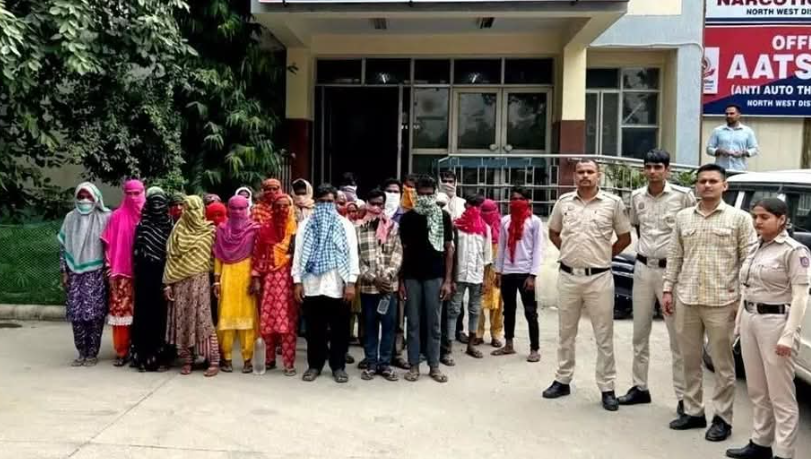
Last month, the Haryana police detained 26 Bengali-speaking individuals in Gurugram on suspicion of being illegal immigrants (from Bangladesh). On verification, they were found to be residents of West Bengal. Allegations have also been made of such detainees being pushed into Bangladesh where they are said to be leading a miserable life. Samirul Islam had also posted on social media an incident where a woman was deported.
He wrote that Sweaty Biwi, who he claimed is “a permanent resident of the Murarai Assembly area in Birbhum and has been living there for generations”. Attaching a video of the woman’s plea, he quoted her saying that “she isn’t speaking from her ancestral home. She is now in Bangladesh, where she and five others — including three minors — were deported by the Delhi Police.” He added, “What a tragedy! Despite being Indian citizens, their only "crime" was speaking Bengali in BJP-ruled Delhi, where they had lived for years in search of survival.”
Meanwhile, a controversy broke out in July following claims that Assam chief minister Himanta Biswa Sarma has labelled Bengali a “foreign language”. He later posted on his ‘X’ handle, “Agree. Legally, all of them may not be foreigners. But we, the people of Assam—especially Hindus—are becoming a hopeless minority in our own land. All this has happened over a span of just 60 years.”
He ended the post saying, “Do not stop us. Just do not stop us from fighting for what is ours. For us this is our last battle of survival.” Clearly, he was talking about Assam sub-nationalism. This post was preceded by his exchanges on X over the issue with West Bengal chief minister and TMC chairperson Mamata Banerjee.
Assam has been for long raising the issue of illegal immigrants. Taking cognizance of complaints against the alleged Bangladeshi squatters in recent times, several Bengali-speaking people have been evicted, detained, or pushed across the Bangladesh border.
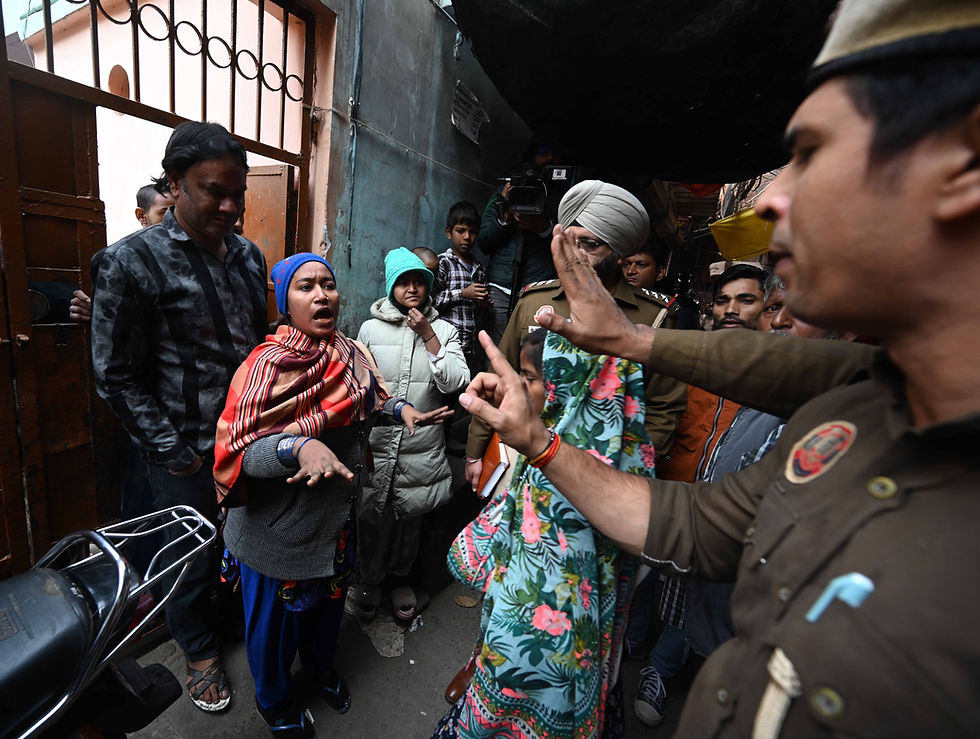
In her state, Banerjee has led high-profile protests, and has been claiming a systematic pattern of linguistic profiling and harassment. She argues that a method is being orchestrated to disenfranchise and intimidate her constituents ahead of the 2026 assembly elections.
That the incidents were reported from states ruled by the Bharatiya Janata Party (BJP) has given the TMC political fodder before state assembly elections in 2026. West Bengal’s ruling party has been under tremendous pressure over allegations of corruption, safety and security of citizens, among other issues.
The chief minister was facing anti-incumbency after a tumultuous reign of over 14 years. She was also trying to quell internal bickering which has reportedly led to streetfights and bloodbath. Add to that the “old vs new” bogie that rises intermittently over party leadership. “Bangali gourav” or Bengali pride has given her an issue for the assembly elections.
Late last month, on her call, the party organised weekend protest programmes across the state. These are likely to continue to run up to the elections. Banerjee herself has announced her intent to raise the issue wherever she visits any district. Earlier, on July 16, the TMC supremo led a massive protest march in Kolkata, decrying the “harassment” of Bengalis in BJP-ruled states.
She threatened to legally challenge Centre’s “secret orders” to states on the issue. “How can Bengalis be detained on mere suspicion? This is unacceptable,” she protested.
Five days later, she reiterated her angst at a massive rally organised by her party in the heart of Kolkata. On July 21 every year, her party organises this rally in memory of 13 people killed in police firing on this day in 1993. Then the state Youth Congress leader, she was leading a group of protestors against the then Left Front government. In her speech, she even threatened to not allow Special Intensive Revision (SIR) of electoral rolls in her state.
SIR process in Bihar, where assembly polls are expected later this year, raised some controversies this time. It will be conducted in other states by the Election Commission of India (ECI). The process is intended to update electoral lists, and flush out bogus voters. But the exercise has triggered a political storm, with the opposition parties calling it an attempt at removing certain sections of voters. They dub the exercise as being held under instructions from the BJP.

They claim that SIR intends to purge the electoral rolls of voters not inclined towards BJP, while the latter accuses them of sheltering illegal Bangladeshi immigrants. Leader of opposition in West Bengal assembly, Suvendu Adhikari, has dismissed the TMC campaign as a smokescreen for the presence of “Bengali-speaking Rohingyas and illegal Bangladeshi infiltrators”.
The BJP has thus raised the issue of nationalism, safety and security of citizens to counter the TMC rhetoric of ‘Bangla Gaurav.’ But across the board painting of Bangla-speaking people as illegal Bangladeshi without verifying their papers may cause massive damage to BJP in state Assembly elections in 2026.
A BJP worker on condition of anonymity told this writer that the “collateral damage” being caused in the process of identification of illegal Bangladeshi may be a cause for concern for the saffron party during state elections.


Comments