.png)

Amorphous Nature of 'Reasonable Restrictions' is the problem: Thakurta
Updated: Oct 1, 2025
Paranjoy Guha Thakurta was recently in the thick of a controversy following a Delhi court order directing him and other journalists to not go ahead with publishing stories against the Adani Group perceived by many to be the favourite of the Narendra Modi government. The gag order has since been lifted. Reporting on, and analysing, the murky corporate-politics nexus has been his forte over his more than 48 years of crusading journalism. Charu Soni caught up with him to discuss crony capitalism and what it means for Indian democracy.
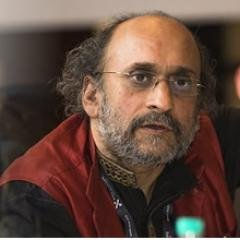
Q: Can you share the reasons why you got interested in the Adani Group?
A: Much of my work has focused on the political economy of India and the world. Within the political economy of India, I have focused on the nexus between business and politics. I find this particular aspect of India's political economy fascinating. I have written, done interviews and made documentaries on a large number of business groups and industrial houses.
Q: Could you name some?
A: The Tatas, the Birlas, the Sahara Group headed by the late Subroto Roy, The Times of India Group, among others. More recently, I have written on the Crompton Greaves (CG) Group which was controlled by the Thapars, the India Bulls Group headed by Sameer Gehlot and the Cox & Kings Group, among others. The book titled “Gas Wars: Capitalism and the Ambanis,” was the first book I published. It came out in March 2014. This is before Narendra Modi became prime minister. My first article on the Adani Group came out in The Citizen edited by Seema Mustafa in April 2015.
Q: What was it about?
A: Seema wanted me to write about the Adani Group, and I said, "Look, I have nothing new to add. I have nothing exclusive." She said, "No, there's a lot that's happening. The Adani Group is trying to set up the world's biggest greenfield coal mining project in Australia, in Queensland, and this is a big issue. It has become very controversial in Australia because the environmental groups are opposed to it."
You see, it was proposed to be the world's biggest greenfield coal mining project. It was not just a coal mine or a series of coal mines. There was a railway line, there was a port.
The environmental groups in Australia were opposed to the project for various reasons. They felt that this would damage the ecology of that area, specifically the ecology of the Great Barrier Reef, a World Heritage Site. The State Bank of India was supposed to finance the project cost to the extent of one billion US dollars. When Narendra Modi visited Australia for the G20 summit around this time, a photograph of prime minister Modi, Gautam Adani and the then head of the bank Arundhati Bhattacharya was published in the media. But the loan did not come through. The Adani article was published in The Citizen.
Q: Then, the Economic & Political Weekly (EPW) episode occurred. What happened?
I joined the EPW in April 2016 and was there for 15 months. After I became the editor of the publication, there were several articles that appeared, one of which became very controversial. I just want to disabuse you and everybody through your readers of the impression that I have been obsessed with the Adani Group.
Q: Yes, that is the perception that is being created…
A: Which is not true. Because even as I reported on the Adani Group, I've written about so many others.
I have recently coauthored (with Sourya Majumder) and published a book on Bhavish Aggarwal of the Ola Group. And it's a very, very critical account. Why did I mention all these individuals and organisations, Ambani or Subroto Roy or The Times of India? They all served me legal notices. The Times of India served me a legal notice after I wrote an article on the dispute over the use of the name ‘Financial Times’ in The Mint. The Sahara Group served a legal notice on me in connection with an article published by Rediff.com. In 2018, I coauthored with Majumder and published a book titled “Loose Pages: Court Cases That Could Have Shaken India – Recalling the Birla-Sahara papers and Kalikho Pul’s suicide note” (Pul was the former Chief Minister of Arunachal Pradesh). Earlier, when “Gas Wars” was published, four legal notices were served on me by lawyers representing both the brothers.
Q: The Ambani brothers?
A: That's correct. So, what's the difference? The difference is that the Ambanis only served legal notices on me. The Times of India only served legal notices. They never took me to court. Adani's lawyers took me to court.
Q: And which was the first case? How many cases have since been filed against you?
A: At present, there are seven cases pending against me filed by lawyers representing corporate entities that are part of the Adani conglomerate. Five of these are in Gujarat, one is in Rajasthan, and one is in Delhi.
Q: Are all these cases criminal defamation cases?
A: There are both civil and criminal cases against me. Each case is different. But it is wrong to say, as suggested in the suit filed in the Delhi court, that I have an agenda to attack Gautam Adani. This is nonsense. An impression is also being sought to be created that I am attacking India's growth story. Pardon my Bangla, this is bullshit.
Q: What is the crux of the problem here then, freedom to report?
Article 19(1)(A) of the Constitution of India states that the right to free expression is a fundamental right of every citizen of India. A journalist derives her or his right to free speech from that Article. Problems arise as to how you interpret Article 19(2) of the Constitution of India, which lays down what are called ‘reasonable restrictions’ on the right to free speech and free expression. This word 'reasonable' is interpreted differently by different sections: by one of your neighbours who doesn't like your face, the constable from your local police station, the goon from a political party who thinks you're anti-national or the Inspector General of Police, the Director General of Police, the lower court magistrate, or the Chief Justice of India. This word 'reasonable' and its interpretation is the source of all the controversy.
Q: It depends on the judiciary, a judge…
A: Why only on a judge? Why not civil society? I mean who decides what is reasonable or what is not? Now, as you know, the former chief justice of India, he was not then the Chief Justice of India, Dipak Misra had headed a bench which ruled that the right to free speech can be put on the same level as the right to a person's reputation.
Q: You mean the Subramanian Swamy vs Union of India case, where Justice Dipak Misra ruled that the Right to Reputation is a fundamental right under Article 21 of the Constitution and it does not unduly infringe on the right to freedom of speech…
A: This is the issue of criminalization of free speech. You see, each country has a different law vis-a-vis personal reputation and liberty. But defamation in India is both a civil offence as well as a criminal one. Debates have been going on for several decades as to whether the right to free speech should be on the same level as the right to personal reputation. The Justice Dipak Misra Bench judgment put them more or less on an equal plane. Subsequently, others felt that we need to follow this line and decriminalize defamation.
If you have defamed or allegedly defamed somebody, let it be a civil offence. What does a civil offense mean? That you can be fined. In a criminal defamation suit, you have to appear before a court of law. I had to appear three times before a court in Mundra. I have had to appear, along with others including two septuagenarians Prabir Purkayasthan and D Raghunandan, five times before a village court in Baran district, Rajasthan, 650 kms from Delhi. Why? Because they were all criminal defamation suits. Criminal defamation requires you to be physically present in court. You cannot be represented just by a lawyer. Am I clear on this?
Q: Yes…
A: We've recently got an observation from the Supreme Court in The Wire vs Amita Singh case that defamation should be decriminalized.
Q: Do you see Adani's suit as scare tactics or is he really keen to protect his reputation? Especially, in terms of using SLAPP (Strategic Litigation Against Public Participation)?
A: Of course, Adani and his lawyers believe his reputation needs to be protected. As a journalist, I can speak for myself. I think what I have written along with others has been factually correct. Balanced. We've sought the opinions of the Adani Group. On some occasions they've responded. We have been fair in our coverage. We have been factually accurate. We've sought to authenticate every bit of information we have published. So, when Adani's lawyers claim that I am carrying on a campaign to spread falsehoods, defamatory information, etc., etc, I strongly, very strongly, refute that allegation. And my personal view is that to call me a purported journalist who's engaged in spreading falsehoods is itself defamatory.
Q: Why do you think they are taking such steps?
A: They are seeking to undermine my credibility, ruin my reputation as a journalist. I have been a journalist for more than 48 years. I have been accredited to the Press Information Bureau (PIB) of the government of India for more than 35 years.
Q: How do you view the timing of the latest SLAPP?
A: I have no idea. I cannot explain the timing.
Q: Why now?
A: I have no idea. That question has to be put to Shri Adani and his lawyers. You can read their suit, you can read their views, and they have given their reasons. But for me, I cannot explain. I don't know why, honestly, I don't know why.
Q: In the latest suit, Adani’s lawyers have mentioned ‘energy security of India’. How do you see this?
A: Do you believe that one journalist or a small group of journalists writing articles can endanger or jeopardize the energy security of this country? I ask this question as a rhetorical question. That's all.
Q: Okay, to round up this interview, in a democracy the media is seen as the fourth pillar. Today, that fourth pillar appears to be crumbling. And business houses such as the Adanis seem to be saying, why do people need to know what a company is doing or not doing?
A: The Adani conglomerate is one of the biggest in India. It has interests in a very vast range of sectors, many of which are part of the infrastructure sector, whether it be seaports, airports, coal mining, power generation through coal, transmission and distribution of electricity, solar power, gas distribution, edible oils, apples distribution, real estate, including the redevelopment of Dharavi. It's a long, long list. Such a big conglomerate! So many employees! It influences the lives of so many citizens of this country. Now, if journalists do not critically examine the working of a large corporate conglomerate such as the one headed by Gautam Adani, the journalist would be failing in her or his duty.
A journalist's job is to speak truth to power, raise questions, raise difficult questions, to whoever is in positions of power and authority.


Comments